
The Strategic Evolution of Nearshoring: A Comprehensive Industrial and Economic Analysis of Bisonó, Santiago Province (2025-2026)
The global manufacturing sector is currently navigating a period of profound structural realignment, driven by a transition from traditional offshoring to regionalized supply chain architectures. This phenomenon, widely categorized as nearshoring, represents a strategic pivot designed to enhance operational resilience, minimize logistical lead times, and leverage preferential trade agreements. The Dominican Republic has emerged as a central protagonist in this shift, particularly within the Santiago Province and the municipality of Bisonó (Navarrete). As of 2025, the convergence of macroeconomic stability, specialized industrial infrastructure, and an evolving labor market has established a turnkey environment for United States manufacturers seeking to mitigate the risks associated with Trans-Pacific volatility.
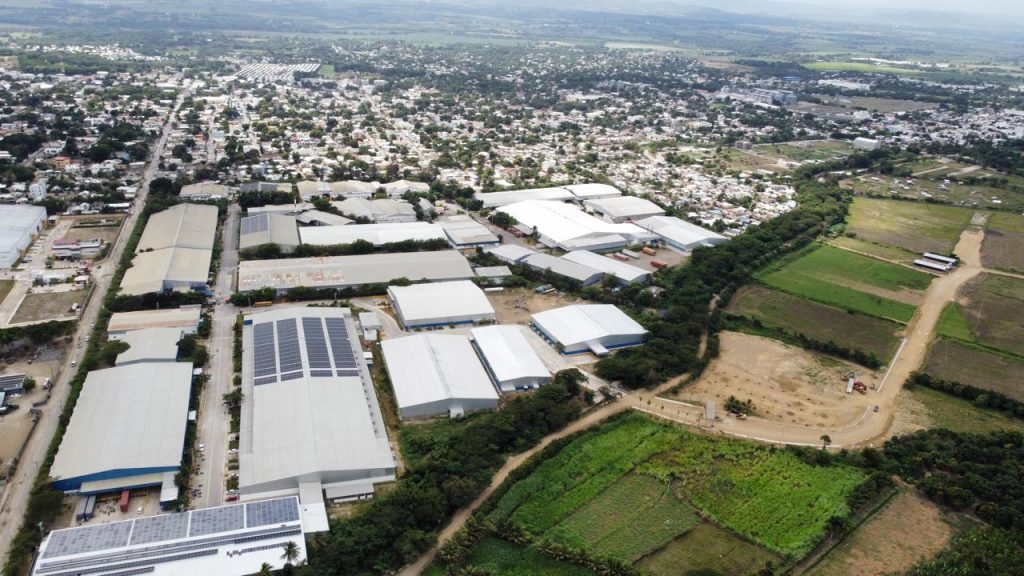
The analysis that follows explores the multi-dimensional facets of this industrial ecosystem. It examines the fiscal incentives under Law 8-90, the technical specifications of world-class facilities like the Parque Industrial Zona Franca Navarrete (PIZFN), and the logistical advantages offered by the region’s connectivity to major U.S. ports. By synthesizing current export performance data with forward-looking infrastructure developments scheduled for 2026, this report provides a granular roadmap for executive decision-makers evaluating the Bisonó corridor as a high-performance manufacturing site.
The Macroeconomic Thesis for the Dominican Republic
The economic performance of the Dominican Republic through 2024 and into 2025 demonstrates a remarkable resilience within the Latin American context. Historically, the nation has maintained an average real GDP growth rate of approximately 5%, a trend that has continued even amidst global inflationary pressures and supply chain disruptions. This stability is not incidental but is the result of deliberate policy-making aimed at attracting Foreign Direct Investment (FDI) through generous tax exemptions and the establishment of robust Free Trade Zone (FTZ) regimes.
In 2024, the Dominican Republic attracted a record US4.52 billion in FDI, representing a 3% increase over the previous year, a performance that stands in stark contrast to the general decline in FDI inflows across Latin America and the Caribbean.[span_10](start_span)[span_10](end_span) Data from the first half of 2025 indicates a continued upward trajectory, with US2.89 billion in FDI recorded—a 15.3% year-on-year increase. The concentration of this capital in high-value sectors such as medical devices, clean energy, and electronics reflects a shift in the country’s industrial identity from low-cost assembly to sophisticated manufacturing.
Export Dynamics and Sectoral Growth
The Free Trade Zone sector is the primary engine of this growth, accounting for over 60% of total national exports in 2025. Total sector exports for 2025 are estimated to exceed US$8.6 billion, consolidating the DR’s position as a regional trade hub. The following table illustrates the extraordinary growth rates observed in key manufacturing sectors between 2020 and 2024, highlighting the sectors currently driving the demand for industrial space in the Santiago-Bisonó corridor.
| Manufacturing Sector | 4-Year Growth Rate (2020-2024) | Total Export Value (2024) |
|—|—|—|
| Medical Devices and Instruments | +52% | US$2.76 Billion |
| Tobacco and Related Products | +53% | US$1.32 Billion |
| Jewelry and Precision Metals | +61% | N/A |
| Agricultural Products | +252% | N/A |
| Carton, Paper, and Packaging | +855% | N/A |
The diversification of the export base suggests that the industrial facilities in Bisonó must now meet a broader range of technical requirements. While traditional textile manufacturing continues to be a vital component of the economy—supporting over 470,000 jobs in the regional supply chain—the surge in medical devices and specialized packaging requires facilities with advanced climate control, humidity regulation, and high-purity water systems.
Regional Analysis: Bisonó as an Industrial Gateway
The municipality of Bisonó, commonly referred to as Navarrete, occupies a strategic position within the Santiago Province. It serves as a vital artery connecting the industrial heartland of the Cibao Valley with the northern coastline and the Atlantic shipping routes. The regional advantage of Bisonó is defined by its proximity to the Cibao International Airport (STI) and the proximity to both northern and southern seaports, creating a dual-gate logistics framework.
The development of the Bisonó corridor is fundamentally linked to the growth of the Santiago Province, which has seen the largest increases in industrial park concentration and labor force participation in the country. By the end of 2025, the province has consolidated its role as a preferred destination for nearshoring, supported by economies of scale and a well-developed network of productive linkages between companies.
Connectivity and the 2026 Infrastructure Horizon
The logistical efficiency of Bisonó is set for a significant transformation with the completion of major infrastructure projects in early 2026. The Circunvalación Navarrete, a strategic bypass highway, is scheduled for handover in February 2026. This project, representing a portion of a larger US$39 million investment in regional vial development, is designed to remove heavy industrial traffic from the urban center of Navarrete, significantly reducing transit times to the ports of Puerto Plata and the DR-1 Highway.
| Infrastructure Project | Completion Date | Strategic Impact |
| Circunvalación Navarrete (Bypass) | February 2026 | Reduced transit drayage; improved port access |
| Santiago Monorriel (Phase 1) | Early 2026 | Modernized labor commute; reduced congestion |
| Duarte Highway Rehabilitation | Ongoing 2026 | Enhanced connectivity between Santo Domingo and Cibao |
For a U.S. manufacturer, these developments translate into lower operational friction and improved supply chain predictability. The entry into operation of the Santiago Monorriel in 2026 is particularly significant for labor management, as it will facilitate the movement of thousands of workers across the province, ensuring that industrial zones like those in Bisonó have consistent access to the regional talent pool.
Technical Infrastructure: The PIZFN Turnkey Model
The Parque Industrial Zona Franca Navarrete (PIZFN) represents the operational vanguard of the Bisonó corridor. Since its inception in 1986, PIZFN has evolved into a sophisticated campus housing 36 industrial buildings and 27 companies. The park’s value proposition is built upon “plug-and-play” readiness, sustainable utility infrastructure, and CTPAT-certified security.
For manufacturers in precision-sensitive industries, the park offers advanced building designs that address the challenges of manufacturing in a tropical climate. The proposal for “Building 39” serves as a benchmark for contemporary industrial architecture in the region, focusing on thermal integrity and humidity control.
Architectural Engineering and Environmental Control
Building 39 is a 30,000 square foot (2,787 m^2) facility engineered to maintain an internal temperature of 20^{\circ}C \pm 1^{\circ}C and a relative humidity of 65%. These specifications are critical for the assembly of medical devices, electronics, and specialized textiles that are sensitive to moisture and thermal expansion.
| Facility Feature | Specification | Material/Performance Data |
| Total Building Area | 30,000 sq ft | 100 ft x 300 ft dimensions |
| Center Height | 27 ft | Optimized for vertical racking and airflow |
| Wall Structure | PIR Sandwich Panel (60-80 mm) | U = 0.35 W/m^2K; solar-exposed reinforcement |
| Roof System | PIR Sandwich Panel (80 mm) | U = 0.27 W/m^2K; Solar-reflective topcoat (SRI \ge 78) |
| Floor/Slab | Perimeter Insulation | Prevents condensation and thermal bridging |
| Electrical | 12.4 kV Line Connection | Reliable high-voltage industrial access |
| Water Supply | Pressurized at 65 psi | Immediate operational readiness |
The use of polyisocyanurate (PIR) panels with a thermal conductivity of \lambda = 0.022 W/m \cdot K ensures that the building envelope minimizes solar heat gain, thereby reducing the energy consumption required for HVAC systems. This technical depth is essential for U.S. companies looking to minimize operational expenditures while maintaining rigorous quality standards.
The 12-Week Rapid Deployment Timeline
A cornerstone of the turnkey approach in Bisonó is the ability to move from contract signing to operational handover in exactly 12 weeks. This expedited timeline is achieved through parallel-track permitting and modular construction techniques.
* Weeks 1-2: Contractual finalization and the immediate submission of Free Zone and office permits. This administrative overlap ensures that physical construction is never delayed by paperwork.
* Weeks 3-4: Foundation work and the precise positioning of columns. The integration of perimeter slab insulation occurs at this stage to prevent future condensation issues.
* Weeks 5-8: Erection of the steel structure followed by the installation of the PIR insulated roof and wall panels. By Week 8, the building’s thermal envelope is largely established.
* Weeks 9-10: Construction of truck ramps and loading docks. External paving and the finalization of electrical (12.4 kV) and water (65 psi) connections are completed.
* Weeks 11-12: Final sealing of the building envelope, including doors and windows. A comprehensive quality inspection is conducted prior to handover, ensuring the facility meets all CTPAT and environmental certifications.
This timeline provides U.S. manufacturers with the agility required to scale operations in response to shifting market demands, a capability that is often lacking in more bureaucratic or less developed industrial zones.
Labor Market Dynamics and Wage Structure (2025-2026)
The labor market in the Dominican Republic, and specifically within the Santiago Province, is characterized by a high degree of specialization and a well-regulated wage environment. While the country remains highly competitive in terms of labor costs, 2025 has seen significant adjustments aimed at improving worker retention and purchasing power within the Free Zone sector.
Phased Minimum Wage Increases
On April 29, 2025, the National Wage Committee (CNS) announced a 25% increase in the minimum wage specifically for Free Zone workers. This increase is being implemented in two strategic phases to allow companies to adjust their financial planning.
| Implementation Phase | Effective Date | Minimum Monthly Wage (DOP) | Est. USD Equivalent |
|—|—|—|—|
| Baseline | Prior to June 2025 | RD$16,700.00 | ~$283 |
| Phase One (+13%) | June 1, 2025 | RD$18,871.00 | ~$320 |
| Phase Two (+12%) | June 1, 2026 | RD$20,875.00 | ~$354 |
For comparison, workers in large enterprises outside of the Free Zone regime earn significantly more, with a minimum wage of RD27,988.80 (~US475) as of April 2025, rising to RD29,988.00 (~US509) in February 2026. The Free Zone regime thus maintains a specific cost advantage for manufacturers while ensuring a baseline of living for its workforce.
Specialized Skills and Workforce Development
The Santiago Province is home to a robust ecosystem of technical education, anchored by institutions such as Infotep. Within the PIZFN campus, the NavInfotep training center provides localized programs in sewing, packaging, industrial electronics, and mechanical maintenance. This proximity to training ensures a continuous supply of skilled labor that can be tailored to the specific operational needs of U.S. firms.
The average manufacturing worker in the Dominican Republic earns an annual gross salary of approximately RD275,639, with senior-level workers earning up to RD333,993. Importantly, 64% of the manufacturing workforce has completed high school, and there is a growing trend toward associate and bachelor-level technical certifications. This demographic profile is ideal for manufacturers moving toward more complex, semi-automated production lines.
Regulatory Framework and Fiscal Incentives: Law 8-90
The legal foundation for nearshoring in Bisonó is Law 8-90 on the Promotion of Free Zones. This legislation provides a comprehensive set of tax and customs exemptions designed to facilitate export-oriented manufacturing. Companies operating under this regime are essentially treated as being outside the national customs territory for fiscal purposes.
100% Tax Exemption Portfolio
The fiscal benefits provided by Law 8-90 are typically granted for a renewable period of 15 years, offering long-term stability for capital-intensive investments.
* Corporate Income Tax (ISR): 100% exemption on all profits generated by export activities.
* Import Duties: 100% exemption on all raw materials, machinery, equipment, spare parts, and packaging materials necessary for production.
* VAT (ITBIS): 100% exemption on local purchases of inputs, facilitated by an annually renewed ITBIS exemption card.
* Property and Asset Taxes: 100% exemption from taxes on the incorporation of companies, capital increases, and real estate transfers.
* Municipal Taxes: Complete exemption from all local and municipal fees that would otherwise apply to industrial operations.
This “tax-neutral” environment allows U.S. manufacturers to retain a higher percentage of their earnings for reinvestment or debt servicing, significantly accelerating the path to profitability compared to operations in the United States or other high-tax jurisdictions.
Local Market Access and Compliance
While the primary focus of Law 8-90 is export, the law allows companies to sell up to 20% of their production into the local Dominican market, provided they pay the applicable local taxes on those specific sales. Certain sectors, such as textiles and footwear, may even sell up to 100% of their production locally if they meet specific national value-added requirements. This flexibility allows manufacturers to use their Dominican base as a regional distribution hub for both local and international markets.
Trade Agreements: DR-CAFTA and the 2025 Reinstatement
The trade relationship between the Dominican Republic and the United States is governed by the DR-CAFTA agreement. As of January 1, 2025, the agreement has reached full implementation, meaning that virtually all qualifying manufactured goods enter the United States duty-free.
Reinstatement of Duty-Free Treatment for Textiles
A critical development in late 2025 was the reinstatement of duty-free treatment for eligible textile and apparel goods under the CAFTA-DR framework. Previously, certain reciprocal tariffs had been imposed, leading to an 8% decline in imports from the region in early 2025. However, in November 2025, the U.S. administration announced frameworks to restore these benefits, specifically for partners like Guatemala and El Salvador, with the Dominican Republic expected to follow shortly thereafter.
The restoration of these benefits is essential for the “co-production chain” that links U.S. cotton and yarn producers with Dominican apparel manufacturers. This integrated regional production model supports hundreds of thousands of jobs in both countries and serves as a strategic bulwark against Asian competitors who do not enjoy similar duty-free access.
Logistics and Supply Chain Resilience
The geographic proximity of Bisonó to the United States provides a decisive advantage in terms of shipping transit times and inventory management. By utilizing the modern port infrastructure of the Dominican Republic, manufacturers can achieve lead times that are impossible to replicate from Asian manufacturing centers.
Maritime and Air Freight Connectivity
Bisonó manufacturers primarily utilize the Port of Caucedo, which is one of the most technologically advanced transshipment hubs in the Caribbean. The port offers high-frequency sailings to major U.S. East Coast hubs, including Miami, Jacksonville, and Port Elizabeth.
| Route (Port to Port) | Typical Sea Transit Time | U.S. East Coast Proximity |
|—|—|—|
| DR to Miami/Jacksonville, FL | 3 – 5 Days | High-speed corridor; weekly sailings |
| DR to New York/New Jersey | 18 – 25 Days | Major consumer market access |
| DR to US Gulf Coast | 5 – 10 Days | Access to Southern distribution centers |
For time-sensitive shipments, the Cibao International Airport (STI), located just 20 miles from Bisonó, provides daily cargo flights to the United States. Air freight transit times are typically 1 to 3 business days for major locations, with express services offering 1-to-2-day delivery for urgent components.
Security and Compliance: CTPAT and WRAP
The industrial parks in Bisonó, including PIZFN, prioritize supply chain security through CTPAT (Customs-Trade Partnership Against Terrorism) certification. This certification is a critical requirement for U.S. manufacturers, as it streamlines the customs clearance process at U.S. ports of entry, reducing the frequency of inspections and the likelihood of delays. Additionally, many companies in the region hold WRAP (Worldwide Responsible Accredited Production) certification, ensuring that manufacturing processes meet global ethical and environmental standards.
Environmental Sustainability and ESG Integration
Sustainability has become a core component of the Dominican industrial strategy. As of 2025, the government has intensified environmental regulations to align with international standards, particularly regarding waste management and renewable energy.
Renewable Energy and Water Management
PIZFN has taken a leadership role in sustainable industrial practices, integrating renewable energy into its utility portfolio. The park maintains an 18 MW total energy capacity, of which 3 MW is generated through on-site solar installations. This focus on clean energy allows manufacturers to reduce their carbon footprint and align with global ESG (Environmental, Social, and Governance) targets.
Water management is equally robust, with a treatment capacity of 800 m^3/hour and traceable recycling systems that comply with Law 64-00 on Environment and Natural Resources. New regulations introduced in late 2025, specifically Law 98-25, have increased contributions for solid waste management, emphasizing the transition toward a circular economy. Manufacturers in Bisonó are required to implement waste management policies that ensure the safe handling and disposal of industrial byproducts.
Implementation Guide: Establishing a Free Zone Company
The process of establishing a manufacturing operation in Bisonó is highly structured and managed through the National Council of Free Trade Zones for Export (CNZFE). The “Single Permit” (Permiso Único) initiative has streamlined this process, allowing for faster approvals than in previous years.
Step-by-Step Procedural Roadmap
* Selection of Legal Entity: Investors must determine the appropriate legal structure (SRL, SA, or Branch) that aligns with their global tax strategy.
* CNZFE Application: A formal application is submitted to the CNZFE, including a detailed business plan, employment projections, and a letter of intent from an industrial park like PIZFN.
* Technical Evaluation: The CNZFE conducts a 30-day technical analysis of the project. If approved, a resolution is issued authorizing the installation under Law 8-90.
* Operational Registration: The company must register with the General Directorate of Internal Taxes (DGII) to obtain its tax ID and the Social Security Treasury (TSS) for labor compliance.
* Permitting and Customs: This final stage involves obtaining the annually renewed ITBIS (VAT) exemption card and registering with the General Directorate of Customs (DGA) for duty-free import/export.
A processing fee ranging from RD150,000 to RD300,000 is required upon submission of the application, and the entire process from submission to the start of operations can be completed in approximately 45 to 60 days, excluding facility construction.
Risk Mitigation and Political Stability
The Dominican Republic offers a stable democratic environment that is highly supportive of foreign investment. The nation is an upper middle-income country that has prioritized creating a sound enabling environment for U.S. businesses. Unlike many other nearshoring destinations, the DR offers national treatment to foreign investors, meaning they have the same rights to own property and engage in remunerative activity as domestic firms.
Furthermore, the legal framework for investment is supported by bilateral agreements and the DR-CAFTA treaty, which provides a level of legal predictability and protection that is critical for long-term capital investments. While challenges such as bureaucratic complexity and energy costs remain, the government is actively pursuing structural reforms to simplify processes and reduce the high costs of transportation and electricity.
Strategic Conclusions and 2026 Forecast
The analysis of the Bisonó corridor in the Santiago Province reveals a mature, high-performance manufacturing ecosystem that is uniquely positioned to benefit from the ongoing nearshoring trend. The convergence of technical excellence—exemplified by PIZFN’s Building 39—and strategic infrastructure developments, such as the Circunvalación Navarrete, creates a compelling value proposition for U.S. manufacturers.
By 2026, the region will have consolidated its logistics advantage, offering faster transit times and a more modernized labor commute. The phased wage increases implemented in 2025 and 2026, while increasing nominal labor costs, will likely enhance worker productivity and social stability, reinforcing the country’s attractiveness as a long-term investment destination.
The fiscal incentives provided by Law 8-90 remain among the most competitive in the world, offering a 100% tax-exempt environment that is fully compliant with international trade standards. For companies seeking to build resilient, cost-effective, and sustainable supply chains, Bisonó represents a premier turnkey gateway to the Americas.
The data provided in this report, from thermal conductivity values to maritime transit times, is structured to facilitate immediate export into technical specifications sheets or financial models for corporate planning. As capacity in traditional hubs becomes increasingly constrained, early movers to the Bisonó-Santiago corridor will be best positioned to secure the region’s top-tier talent and prime industrial sites.